THE TRICK
Two meanings, one word
A pun exploits several meanings of a word, or words that sound alike. 'Band stand' is a structure and a band standing up: the riddle runs on the gap.
Spot the type
 doodlepun
WORDPLAY, EXPLAINED
READ IT twice
How do you make a band stand? Take away the chairs.
A pun sets you up to read a word one way, then hands you the other. That small double take is the whole trick, and research suggests it is also good practice for reading between the lines.
Updated
Spot the typeTHE SHORT ANSWER
A pun only works if you spot
both meanings, one after the other.
THE TRICK
A pun exploits several meanings of a word, or words that sound alike. 'Band stand' is a structure and a band standing up: the riddle runs on the gap.
Spot the typeTHE BRAIN
A University of Windsor study suggests the left hemisphere handles the language first, then the right hemisphere kicks in to reveal the second meaning.
How it worksREADING
In Sussex studies, children who could explain riddles tended to understand stories better, and riddle training improved reading comprehension.
See the researchA QUICK PUN CHECK
Pick a type of pun to see how it works. The bar shows how well that type survives being said out loud rather than read.
Types and examples follow the standard categories used in reference works on puns. Some puns fit more than one type.
TWO NUMBERS WORTH KNOWING
Two experiments from the University of Sussex
on ambiguity and children's comprehension.
29 children
Children aged 8 to 11 who explained 16 riddles
For riddles needing high language awareness, recalling and explaining them was significantly related to reading comprehension, even allowing for age and reading accuracy. How funny children found them was unrelated.
EXPERIMENT 1 · SUSSEX
7 sessions
Riddle and word-game training for 7 to 8 year-olds
After seven sessions, trained children, both good and poor comprehenders, improved in comprehension significantly more than control groups given humorous material without ambiguity.
EXPERIMENT 2 · SUSSEX
The findings were presented to the British Psychological Society's annual conference in Brighton in March 1998. Researchers noted that children's reading progress tends to drop at around seven to nine years.
FOUR WAYS TO PLAY
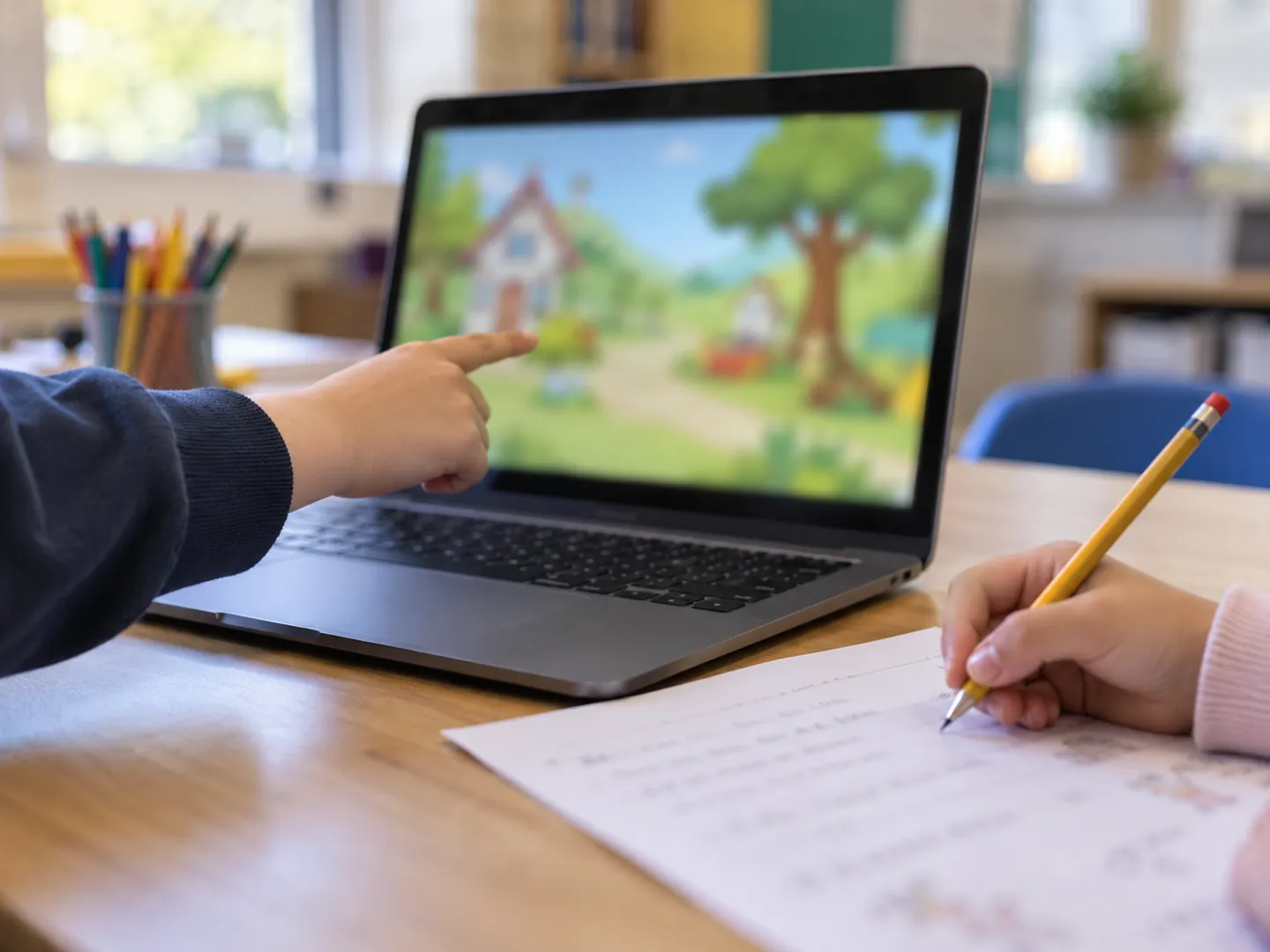
None of this needs a lesson plan. The Sussex work was about noticing that words can mean two things, and talking about why a riddle is funny.
Explaining a riddle, not just laughing at it, was what linked to reading comprehension in the Sussex study.
Name the two senses out loud: a paper shop as a shop made of paper, and a shop that sells newspapers.
Pick a word with two meanings and build a question around the less obvious one. Children in the trials went on to invent their own.
The lead researcher worried that parents might use riddles as a test. Keep the tone light.
INSIDE THE DOUBLE TAKE

In the University of Windsor study, published in the journal Laterality, people saw words linked to puns in one half of their visual field, and reaction times showed which brain hemisphere was leading.
The researchers suggest the sentence primes one meaning in the language-dominant left hemisphere, and the right hemisphere then supplies the unexpected one: expectation plus incongruity, the basic formula of humour.
Questions
A form of wordplay that exploits the multiple meanings of a word, or words that sound similar, for a humorous or rhetorical effect. The formal term is paronomasia.
No. A malapropism is a mistaken word in place of the right one. A pun deliberately uses expressions that have more than one reasonable meaning.
Puns divide opinion, and critics have called them the lowest form of wit. The groan may be part of the fun: you were led one way, then caught out by the second meaning.
In University of Sussex studies, children who could explain riddles that relied on language ambiguity had better reading comprehension, and riddle training improved comprehension more than humour without ambiguity.
No. Reference works note that puns have long been used as a serious poetic device and as a memorable rhetorical tool in titles, slogans and names.
Sources
ABOUT THIS NAME
doodlepun.com is part of the DoodleSale portfolio. It isn't in an auction right now, but you can ask about leasing it.